Data preparation
Practical use of R and RStudio to organise and prepare data for analysis and research tasks.
Search the website
Type at least 2 characters to see results.
Searching…
No results found. Try another keyword.
Practical R and RStudio training for Caritas Germany’s Afghanistan office in Kabul, building skills in data preparation, analysis, visualisation and research interpretation, with relevance to data-driven monitoring and evaluation.
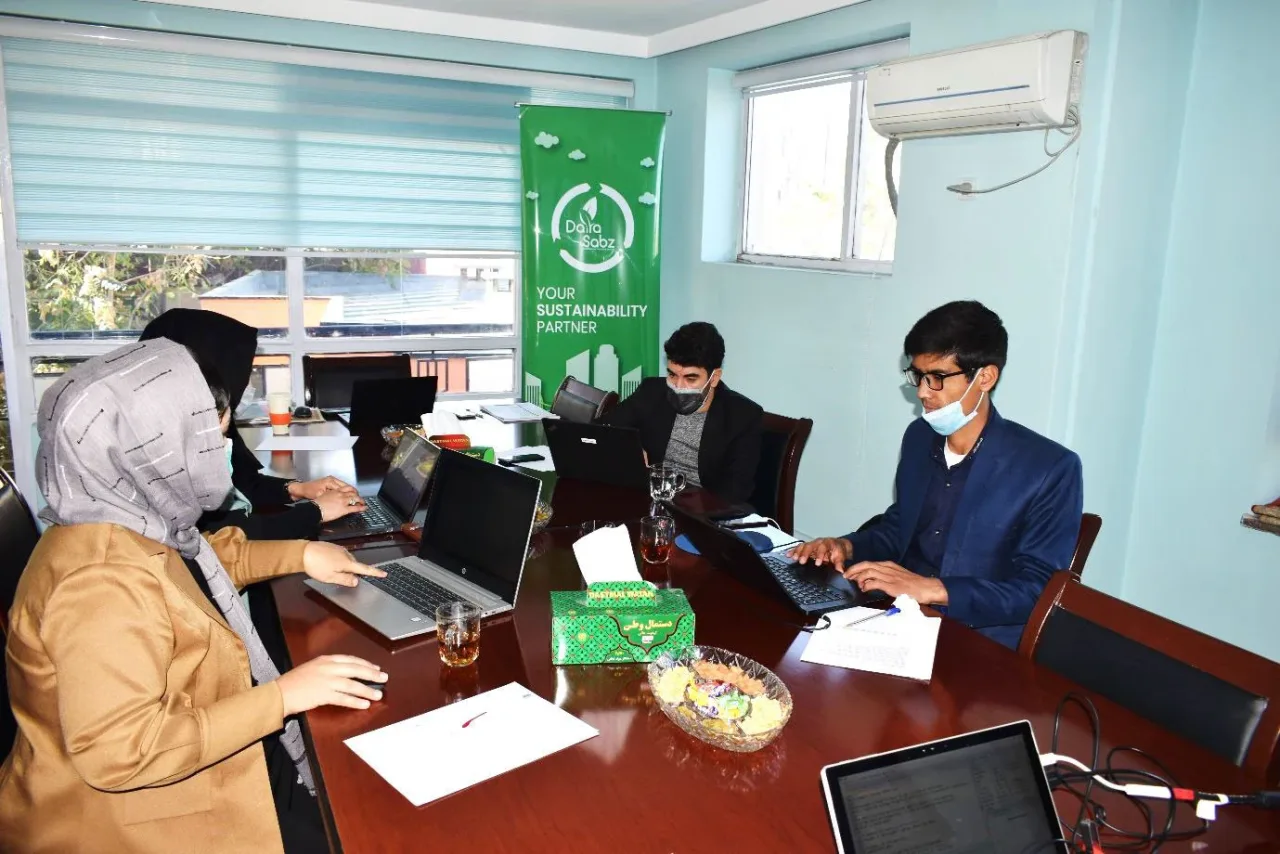
Daira Sabz delivered practical R and RStudio training for Caritas Germany’s Afghanistan office in Kabul. The assignment covered data preparation, analysis, visualisation and research applications, supporting staff in working more confidently with data.
These capabilities are relevant to data-driven monitoring and evaluation: organising programme information, exploring survey results, identifying patterns and communicating findings. The project demonstrates applied analytical capacity building and a foundation for further learning in data science, research and evidence-based programme management. Relevant Sustainable Development Goals — SDGs 4, 17. R and RStudio training for Caritas Germany developed practical data-analysis skills relevant to reproducible research, visualisation and evidence-informed monitoring and evaluation. This is thematic alignment with the documented assignment, not independently measured SDG outcomes.
The training focused on practical use of R and RStudio for organising, analysing and visualising data, with applications in research and organisational learning.
Practical use of R and RStudio to organise and prepare data for analysis and research tasks.
Explore data and present patterns through analytical outputs and visualisations.
Connect analytical findings with research questions and clear communication of evidence.
The learning pathway connected working with data, analysing patterns and communicating findings in a research context.
Begin with organising and preparing datasets within an R/RStudio workflow.
Use practical analytical work to examine data and understand patterns.
Relate outputs to research questions and communicate findings in a useful form.
Data-driven monitoring and evaluation depends on the ability to prepare data, examine patterns and communicate findings clearly. R and RStudio skills provide a foundation for these tasks and for further learning in data science, helping teams make more informed use of programme and research information.
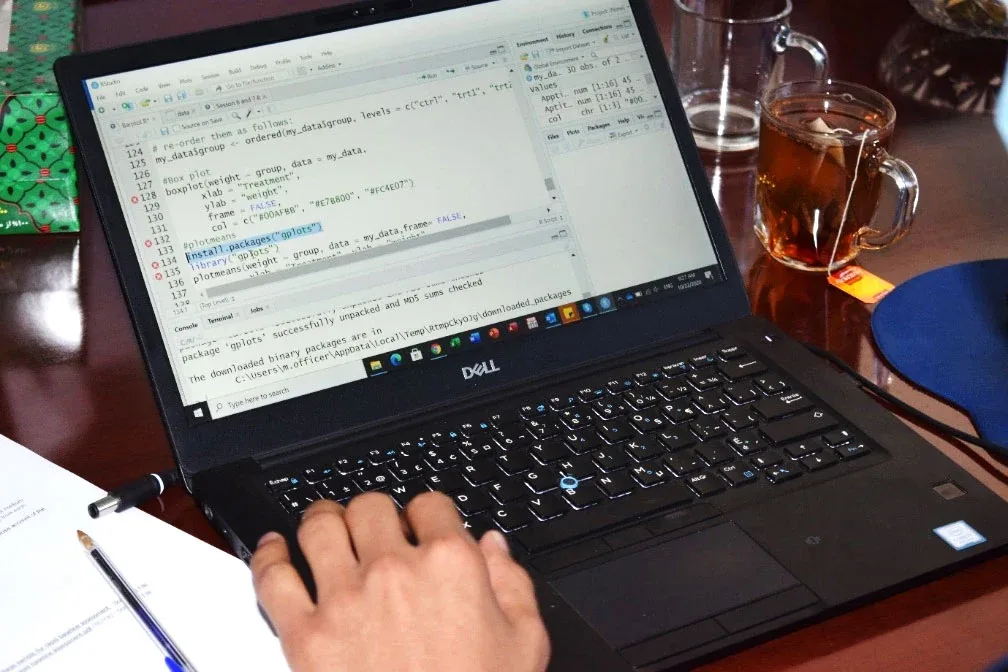
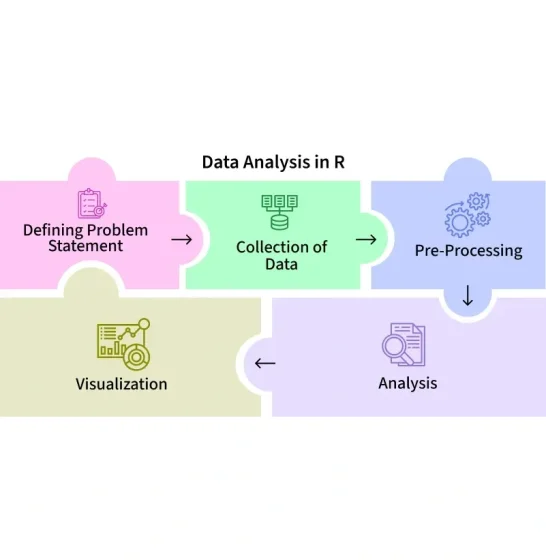
Participants working with R in Kabul, a coding exercise and the supplied English-language data-analysis workflow.
 Climate & Agriculture
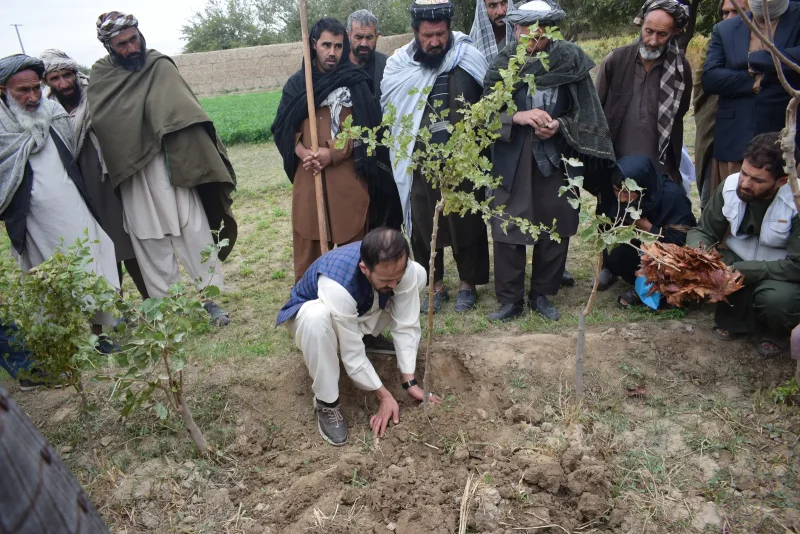
Climate-smart agriculture training for Norwegian Church Aid under PEARL–ABADEI 2.0: 105 training-of-trainers participants and 355 farmers across 16 districts, supported by manuals developed in English and translated into Dari and Pashto.
Kandahar, Zabul, Balkh, Helmand and Samangan — northern and southern Afghanistan
 Climate & Agriculture
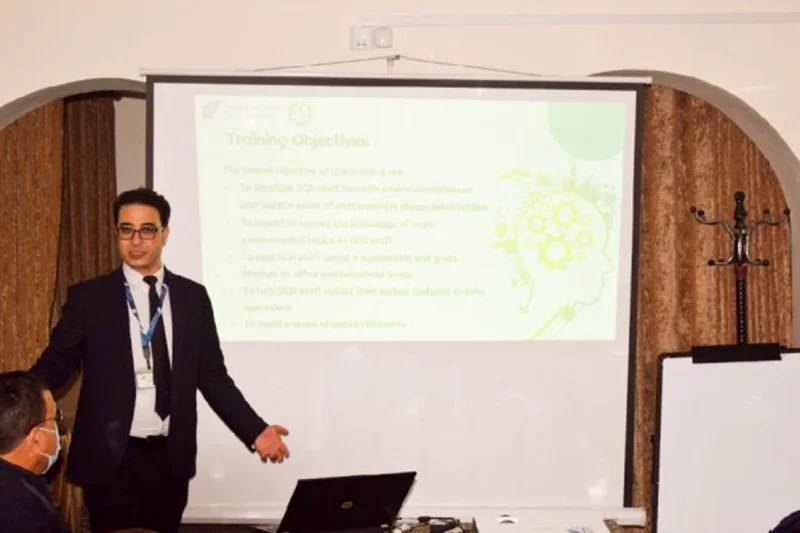
Institutional environmental capacity development for the Swedish Committee for Afghanistan across six locations, combining training materials, pre- and post-training assessments, facilitation, reporting and recommendations for future staff learning.
Kabul, Jalalabad, Ghazni, Wardak, Takhar and Mazar, Afghanistan
 Climate & Agriculture
Climate-smart agriculture capacity development for NCA’s REACH programme across four eastern provinces and eight districts, including greenhouse and value-chain guidance and beneficiary selection criteria.
Kunar, Laghman, Nuristan and Nangarhar, Afghanistan
Planning R/RStudio training, research-skills development or analytical support for monitoring and evaluation? Discuss your team’s experience, datasets and reporting needs with Daira Sabz so we can define a practical learning or analysis assignment.